


How do I store a riding carry - on suitcase when not in use?
Nov 03, 2026
Leave a message
If you’re the proud owner of a riding carry-on suitcase—whether you rely on its motorized wheels for airport treks or its compact, rideable frame to cut through crowded terminals—you know how transformative this gear is for travel. But once the trip ends, and you’re back home or storing it between journeys, a common question pops up: How do I store a riding carry-on suitcase properly to keep it in top shape, ready for your next adventure? As a supplier of high-quality riding carry-on luggage, we’ve spent years testing storage best practices, working with frequent travelers, and refining guidelines that balance durability, functionality, and space efficiency. Below, we break down science-backed, practical storage methods tailored to these unique pieces of gear, plus tips to protect your investment and extend its lifespan.
First, it’s critical to understand why storing a riding carry-on suitcase differently than a standard hard-shell or rolling suitcase matters. These products—like the Smart Electric Portable Luggage we design and supply—feature specialized components: a rechargeable lithium-ion battery, motorized wheels, a foldable riding platform, and often smart tech like GPS trackers or app connectivity. Each of these parts has specific needs to avoid damage. For example, lithium-ion batteries degrade over time if exposed to extreme temperatures, and unprotected motorized wheels can crack if pressed against heavy objects. Skipping targeted storage steps isn’t just about keeping your suitcase looking good—it’s about preserving the performance that makes these bags so valuable for short trips, airport transfers, and urban commutes.
Let’s start with the most important component to prioritize when storing: the battery. Riding carry-on suitcases use lithium-ion batteries, the same kind found in smartphones and electric cars, which are highly sensitive to heat, cold, and full discharges. If left fully charged for months at a time, the battery can develop capacity issues (you’ll notice it runs out of power faster on your next use). If it’s completely drained and stored in a hot or cold space, it may suffer permanent damage that renders it unusable. Our team recommends charging the battery to 40–60% before long-term storage—this is the “sweet spot” for lithium-ion longevity, per battery science. Where possible, avoid storing the suitcase in areas with temperatures below 32°F (0°C) or above 86°F (30°C): basements that flood, garages that get overheated in summer, or attics that freeze in winter are all bad choices. For short-term storage (1–4 weeks), a closet or under-bed drawer works fine, but for long-term storage (1+ months), we suggest a climate-controlled space, like a spare closet near your HVAC system, if available.
Next, prepare the suitcase’s physical structure and functional parts for storage. Start by cleaning it thoroughly—dirt, dust, food particles, and airport grime can eat away at the suitcase’s shell, wheels, and zippers over time. Wipe down the exterior with a damp microfiber cloth (avoid harsh chemicals, which can fade or crack the material), and use a soft brush to get rid of debris in the wheel wells. For the interior, empty all pockets, wipe down the lining, and leave the zipper partially open to prevent mold or mildew from developing. If your riding carry-on has a foldable riding platform (a key feature of products like the Airport Smart Suitcase Scooter), make sure it’s fully folded and locked into place before storage. This not only saves space but also prevents the platform’s hinge from wearing out prematurely. We also recommend disconnecting any removable cables (like the charging adapter) and storing them in a labeled plastic bag inside the suitcase’s main compartment—this way, you won’t misplace them when you need them next.
Now, space-saving storage solutions for smaller living areas. Many people who use riding carry-on suitcases are frequent travelers or urban professionals who live in apartments with limited storage, so we’ve tested hacks that work without sacrificing protection. Vertical storage is ideal: most riding carry-ons are designed to stand upright, so you can place them in a closet corner, on a high shelf (as long as it’s not near sharp objects or direct sunlight), or tucked between other pieces of luggage. If you have multiple items to store, place the riding carry-on upright between a hard-shell suitcase and a duffel bag—this keeps it stable and prevents it from tipping over. For even tighter spaces, consider a hanging storage organizer designed for luggage, which suspends the suitcase from a closet rod, freeing up floor space. Just make sure the organizer doesn’t press on the wheels or the riding platform when hung, as that can cause warping over time. For those with a garage or basement, avoid stacking heavy boxes on top of the suitcase—even a small box of books can crack the hard shell or damage the motor inside the suitcase. If you do need to stack items, place the riding carry-on on top of lighter, flexible items like blankets or pillows.
Common storage mistakes to avoid, based on customer feedback and our own product testing. One of the biggest mistakes we see is storing the suitcase with the battery fully charged for months on end. Last year, one of our regular customers in New York City stored their Carry-On Smart Electric Mini Suitcase in a basement closet for 6 months without touching it, and when they pulled it out, the battery only held 20% of its original capacity—this is exactly why we emphasize the 40–60% charge rule. Another mistake is leaving the suitcase exposed to direct sunlight for long periods; UV rays can fade the exterior, break down the plastic components, and even damage the battery’s casing. We also don’t recommend storing the suitcase with the telescopic handle fully extended; leaving it locked in the open position can cause the handle’s spring mechanism to wear out, leading to a wobbly handle when you use it next. And while it’s tempting to roll the suitcase into a tight corner, make sure the wheels don’t rub against rough surfaces or other hard objects—scratches on the wheel can lead to uneven movement when you’re riding it through an airport.
For those who need to store their riding carry-on suitcase while traveling or using a temporary space, what are the options? If you’re staying in a hotel between trips, most hotels have luggage storage rooms that are climate-controlled and secure—just ask the front desk for details. If you’re using a coworking space or a shared storage unit, look for a unit that’s not prone to extreme temperatures, and again, charge the battery to 40% before dropping it off. Some of our customers also use travel bags specifically designed for riding carry-on suitcases; these padded bags protect the exterior from scratches and keep all the parts organized. As a supplier, we always recommend investing in a quality storage bag for your riding carry-on, especially if you’re storing it for longer than a month.
Now, when it comes to short-term vs. long-term storage, the guidelines shift slightly. Short-term storage (1–4 weeks) is much simpler: just clean the suitcase, leave the zipper partially open, charge the battery to 50%, and store it in a cool, dry place. There’s no need to disconnect charging cables or fully fold the riding platform, though it’s still a good idea to fold the platform to save space. Long-term storage (1+ months) requires extra steps: fully clean every part, disconnect the charging adapter and store it separately, lock the riding platform and telescopic handle, charge the battery to 40%, and if possible, cover the suitcase with a breathable dust cover to keep dust out. We recommend checking the battery charge every 2–3 months during long-term storage, topping it up to 40% if it drops below 30%—this small step can extend the battery’s life by years.
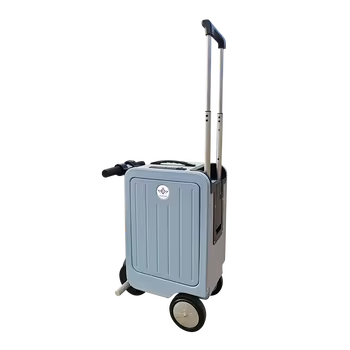

As a supplier, we’ve seen how proper storage makes a huge difference in how long a riding carry-on suitcase lasts. Many of our customers who follow these guidelines report their suitcases still work perfectly after 5+ years of use, while those who skip storage steps often need battery replacements or wheel repairs within 2 years. The Easy-to-Operate Intelligent Short-Trip Riding Suitcase, for example, is designed to be durable, but even the best gear needs proper care to stay functional.
If you’re in the market for a riding carry-on suitcase and want a product built to withstand all stages of use—including proper storage—we’re here to help. Our range of riding carry-on luggage combines reliable motorized performance, smart features, and durable construction, designed to make travel easier and storage straightforward. Whether you’re looking for a compact carry-on for short trips or a versatile scooter luggage electric model for airport commutes, we offer solutions tailored to different travel needs.
To discuss your storage questions, browse our full product line, or place a procurement order for bulk or individual units, please reach out to our team to start a conversation about your riding carry-on suitcase needs. We’re committed to supporting travelers and businesses alike, with products designed for performance and longevity.
References
- Battery University. (n.d.). Lithium-Ion Storage Best Practices. Retrieved from batteryuniversity.com
- International Air Transport Association (IATA). (2022). Guidelines for Transport of Lithium-Ion Batteries on Personal Luggage.
- ASTM International. (2021). Standard Practice for Storage of Luggage and Travel Gear.
- Consumer Product Safety Commission. (2020). Guide to Maintaining and Storing Electric Personal Mobility Devices and Luggage.
Send Inquiry