


Can I take a Transformer Scooter on public transportation?
Nov 23, 2026
Leave a message
Hey there! If you’ve ever looked at a foldable electric scooter and thought, “Wait, can I bring this on a bus, train, or subway?” you’re not alone. As someone who’s been selling Transformer Scooters for a few years now, this question pops up in my DMs, emails, and even at local transit booths almost weekly. Let’s break this down—no boring jargon, just straight-up answers that actually make sense, plus how our products fit into the mix.
First off, what even is a Transformer Scooter for transit use? Unlike regular kick scooters or even standard electric scooters, ours are built to “transform”—meaning they fold down super compact, often into something that looks like a rolling suitcase. That’s the game-changer for public transport, right? Because bulky gear is a pain to haul onto crowded trains or store under a bus seat. But here’s the thing: “Transformer Scooter” isn’t a universal term, so transit rules depend on a few key factors.
Let’s start with the basics every transit rider should know: battery size. Most public transport systems (airlines, trains, subways) follow strict rules for lithium-ion batteries—since they can pose fire risks if damaged. For example, in the U.S., the Federal Transit Administration says e-scooter batteries under 100Wh are generally allowed in carry-ons, but over 160Wh? Sometimes you need special approval, and over 300Wh? A lot of systems ban them. Our Core Scooter, for instance, has a 750Wh battery, but it’s removable—and that’s huge. If you can pop the battery out and carry it as a separate item, most transit teams are way more chill. Pro tip: Always check your local transit’s website first, because rules change by city (looking at you, NYC Subway vs. Portland TriMet).
Next up: the foldability. A lot of people think “transformer” just means folding, but it needs to fold small enough to count as a “personal item” (the kind that fits under your seat, not the big carry-on). Our Comfortable Cycling Electric Riding Suitcase, for example, folds down to 20x12x10 inches—perfect for fitting under a train seat or hanging in a bus’s overhead rack. Compare that to a non-transforming e-scooter, which is often 3+ feet long even folded, and you can see why compactness matters. Some transit systems even have a “no larger than a golf bag” rule for non-motorized personal items, so your scooter needs to hit that mark.
Wait, but what about international transit? I’ve had customers travel to the EU, Japan, and even parts of Southeast Asia with our Transformer Scooters, but every place has its own quirks. In the EU, the European Union Agency for Railways allows foldable e-scooters on trains if they’re under 25kg (that’s ~55lbs) and folded. Our Heavy-Duty Electric Riding Suitcase is right at 24kg, so it checks that box. In Japan, the Tokyo Metro requires e-scooters to be folded so they don’t take up more space than a 60cm (23.6 inch) square—again, our models fit that easily.
Now, let’s talk about the “gray area” products. A lot of cheap no-name scooters online say they’re “transformer” but are flimsy, have unapproved batteries, or don’t actually fold small. I’ve seen folks get turned away at a train station because their scooter was too big, or the battery wasn’t labeled properly. That’s why our Business-Class Electric Seated Suitcase is designed with transit in mind—we label every battery with its Wh rating, test the fold mechanism hundreds of times for durability, and make sure it’s under weight limits almost everywhere.
Wait, can you actually ride it on the transit vehicle itself? No, duh. Most systems ban riding any scooter on subway platforms, buses (while moving), or train cars. You have to fold it and carry it like luggage. But a lot of new riders don’t know that—so that’s a quick heads up: never ride on the train, always dismount before entering a transit station.
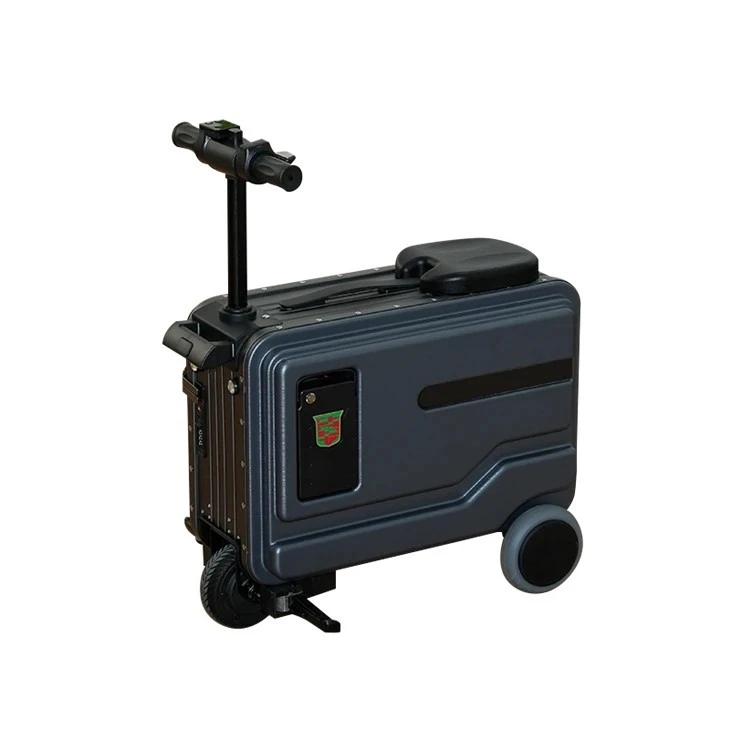

What about airports? If you’re flying, rules are a bit different. Airlines let you bring foldable e-scooters in checked bags, but again, battery rules apply. You can’t check the battery—only carry it on. Our Carry On Bag model is specifically designed to meet airline carry-on size limits, so you don’t have to stress about gate checks. I’ve had customers use this exact model for weekend trips, flying from LAX to Orlando, no issues at all.
Let’s get real: sometimes even the best product might get denied. Why? Some transit systems just have arbitrary rules, or staff are under-trained. The key here is to be prepared. If you show up with a properly folded Transformer Scooter, remove the battery, have the battery’s specs handy (we always include a data sheet with every order), and be polite—9 times out of 10, staff will let you onboard.
Now, if you’re a shop owner, event planner, or just someone who buys in bulk, let’s talk procurement. Our Transformer Scooters are sold to businesses too—we’ve partnered with corporate travel departments, campus shuttle services, and even city transit teams for test programs. If you’re looking to stock these for your customers, or order a large quantity for a team, we can customize batteries, add branding, and even help with transit compliance docs.
So, to wrap this up: yes, you can take a Transformer Scooter on public transit—if it’s compact, has a removable, properly rated battery, and fits your local transit’s size/weight rules. Not all “transformer” scooters are created equal, so go for ones designed with transit in mind (like the ones linked above).
If you’re interested in learning more, or want to discuss bulk pricing for your business, feel free to reach out. We’re here to help you figure out what works for your specific needs.
References
- Federal Transit Administration. (2022). Guidance on Transport of Lithium-Ion Batteries on Public Transit. U.S. Department of Transportation.
- European Union Agency for Railways. (2021). Passenger Guide to Foldable Electric Scooters on Trains. EU Rail Agency.
- Tokyo Metro. (2023). Prohibited Items and Size Limits for Personal Luggage. Tokyo Metropolitan Government.
- International Air Transport Association. (2022). Lithium Battery Regulations for Air Travel. IATA.
Send Inquiry